1st Birthday for Boys: A Designer's Review
As an experienced embroidery designer who has spent years refining designs for small business merchandise, I approach every new file with a critical eye. The goal is never just decoration; it is about creating assets that elevate brand identity and withstand the rigors of commercial production. When evaluating the 1st Birthday for Boys machine embroidery design, I look beyond the festive theme to ask: does this hold up as a professional tool for boutiques, bakeries, handmade brands, and Etsy sellers? This review breaks down how this specific design performs when applied to real-world business scenarios, from branded patches to custom apparel.
First Impressions and Visual Personality
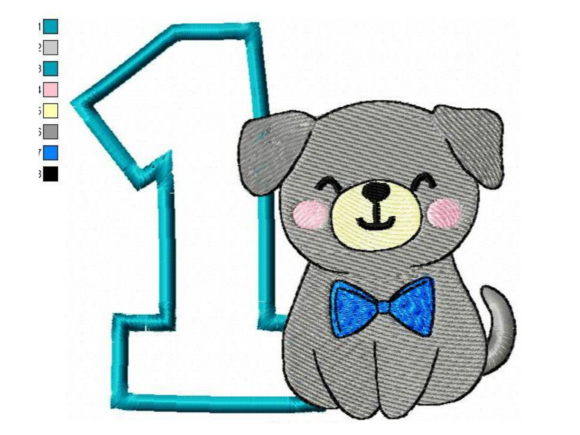
The title 1st Birthday for Boys immediately signals a playful yet celebratory tone. In the world of embroidery, first impressions are made in seconds. Does this design feel premium or cheap? Does it project a sense of handmade product quality or mass-produced uniformity? For a small business owner looking to add a personal touch to their offerings, the visual personality is crucial. This design appears to lean towards a friendly, modern aesthetic that balances professionalism with warmth.
When considering its application on items like tote bag design projects or apron embroidery, the design must not look out of place. A bakery using this for a child's birthday party kit needs a logo that feels inviting but not childish. Similarly, a boutique selling baby gear requires a mark that suggests quality craftsmanship. The description mentions "beautiful," which implies a level of detail that should translate well into high-resolution stitches, provided the stitch density is managed correctly during digitization.
Real-World Business Applications
The true test of any digital embroidery file is its versatility across different product lines. Small business owners often need one design to serve multiple purposes, such as staff uniforms, customer gifts, and event merch. Here is how 1st Birthday for Boys could function in various commercial contexts:
- Embroidered Patches: One of the most popular uses for this type of design is creating custom patches. These can be attached to denim jackets, canvas backpacks, or leather goods sold by independent makers. A well-executed patch adds significant perceived value to a custom apparel item.
- Staff Uniforms and Aprons: For local cafes or bakeries celebrating employee milestones or hosting family events, this design works beautifully on apron embroidery. It humanizes the brand and creates a welcoming atmosphere for customers.
- Cap Embroidery: Adding this design to the front or side of a cap offers a subtle branding opportunity. It serves as a perfect accent for promotional giveaways at children's parties or community events.
- Tote Bag Design: Canvas tote bags are a staple for small business merch. Placing this design centrally or on a pocket allows shoppers to carry the brand's message while adding a personal flair to their purchase.
- Product Packaging Accents: Beyond clothing, this design can be used on fabric tags sewn into gift boxes or as a label on reusable shopping bags, reinforcing brand recognition every time a customer opens a package.
Strategic Considerations and Limitations
While the potential is high, an experienced designer knows where to exercise caution. Not every surface is suitable for every machine embroidery design. There are specific scenarios where 1st Birthday for Boys might struggle if not handled with care:
- Small Patch Sizes: If you plan to create miniature patches for keychains or tiny accessories, intricate details may become lost. High stitch density in small areas can cause the fabric to pucker, ruining the look of the finished product.
- Curved Surfaces: While cap embroidery is common, complex curves can distort text and shapes. Ensure the design is digitized specifically for curved panels to maintain legibility.
- Dark Uniforms: Contrast is key. On dark fabrics, light thread colors might get swallowed unless a heavy underlay or specific stabilizer technique is used. Always verify thread colors against your intended fabric palette before bulk production.
- Frequent Washing: Items like aprons or work shirts undergo rigorous cleaning cycles. Designs with excessive detailing or loose outlines may degrade faster than simpler, bolder graphics.
Impact on Brand Identity and Customer Trust
In the competitive landscape of Etsy branding and craft businesses, visual consistency is a primary driver of customer trust. A poorly executed commercial embroidery project can make a brand look amateurish, whereas a crisp, professional finish elevates the entire product line. Using a design like 1st Birthday for Boys effectively communicates attention to detail.
When a customer receives a tote bag or a piece of custom apparel with a flawlessly embroidered logo, it validates their purchase. It suggests that the business cares about quality. Furthermore, a cohesive set of design assets helps build a recognizable brand identity. If this design is part of a larger collection used across hats, bags, and labels, it strengthens the visual narrative of the brand, making it more memorable to repeat buyers.
Practical Designer Notes for Production
Before committing to a full production run, there are essential steps every designer and business owner must take. Do not skip these checks, as they prevent costly mistakes:
- Test in Black and White: Convert the design to grayscale to ensure the contrast holds up without relying on color alone.
- Check Small Scale: View the design at the actual size it will be produced (e.g., 2 inches) to confirm readability.
- Review Thread Color Contrast: Ensure the chosen threads pop against the final fabric texture.
- Inspect Spacing: Verify that elements are not too close together, which can lead to thread breaks.
- Confirm Hoop Size: Ensure the design fits within the standard hoops available in your shop to avoid re-digitizing.
- Test on Real Fabric: Never guess. Stitch the design on the actual material you intend to use to check for puckering or distortion.
- Use Proper Stabilizer: Select the correct stabilizer weight to support the fabric and maintain the integrity of the embroidered patch or garment.
- Create a Mockup: Use a printable mockup to visualize the design on the final product for client approval before stitching.
- Compare Assets: Place this design beside other brand assets to ensure stylistic consistency.
- Verify Licensing: Most importantly, confirm commercial licensing terms. Just because you own the embroidery file does not always mean you have the right to sell products featuring it.
By following these guidelines, small business owners can leverage the 1st Birthday for Boys design to create high-quality merchandise that resonates with customers. Whether you are launching a new line of handmade product or expanding your service offerings, this design offers a solid foundation for professional results. Remember that the success of the final product lies not just in the design itself, but in the preparation and execution behind it.